

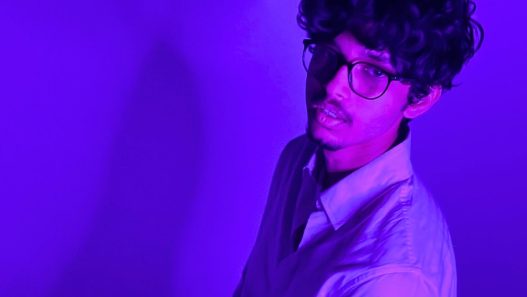




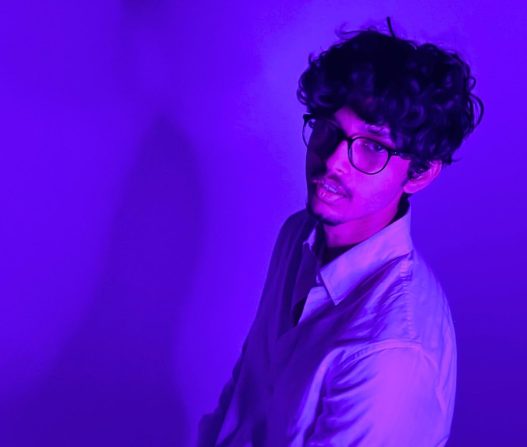
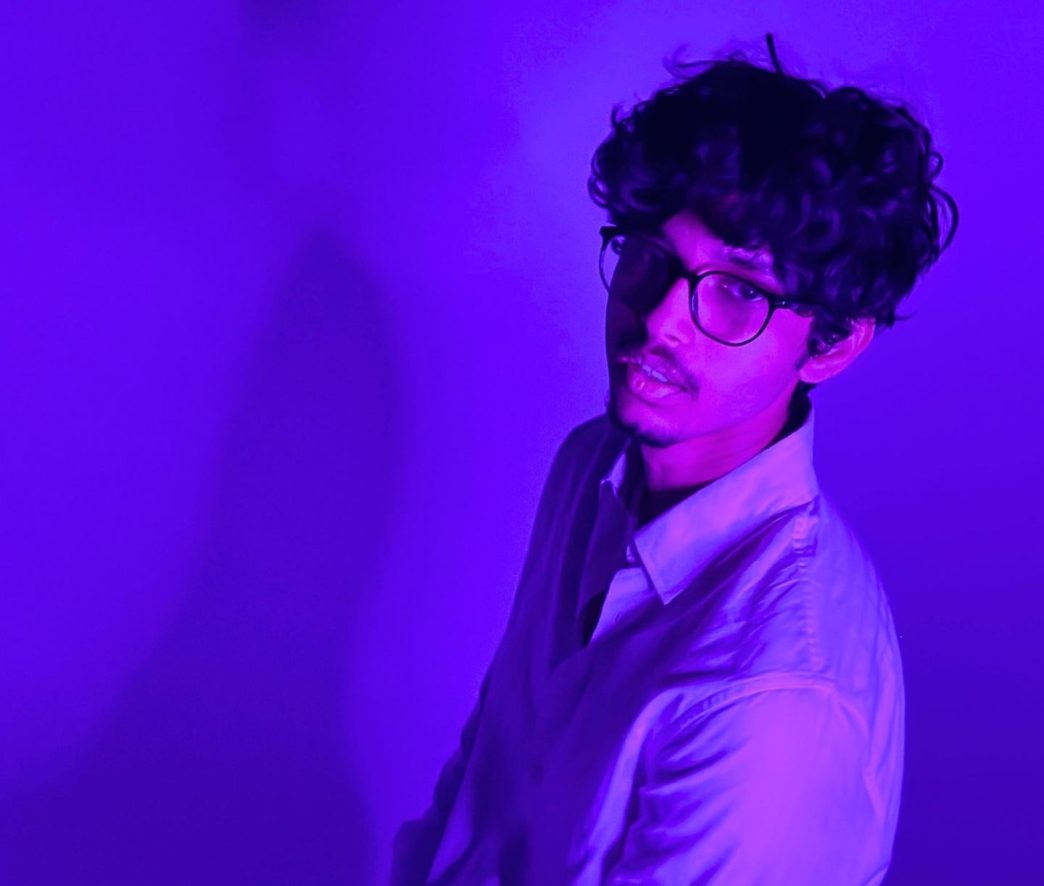
HashR, the London-based sonic curator and key architect of the GALAATA platform, has quickly carved out a distinctive space in the city’s underground by blending UK bass pressure with fractured breaks, South Asian electronica and diasporic club textures into narrative-driven sets that thrive on unexpected left turns and organised chaos. Drawing from a background in law and a life split between New Delhi and London, he has become a regular at rooms including Club Makossa, The Social, The Greyhound and Brixton Jamm, while hosting the monthly Galaata w/ HashR show on Aaja Radio and holding a residency at Subtle Radio, turning the project’s radio roots into a growing series of genre-defying parties that prioritise collective release over neat boundaries.
With GALAATA’s five-hour takeover of Vespers Club in Peckham on 5 February 2027 approaching, we sat down with HashR to talk about the chaos and comfort of London winters, the urban storytelling behind his sets, and the realities of building independent spaces in an increasingly saturated scene.
Tickets and event listing: ra.co/events/2584989
Hey, thanks so much for sitting down with us today – what’s been the absolute best part of your week so far, music aside? 
Winter has officially struck London, which means I’m back to my favourite evening ritual of hot chocolates, films and absolutely no desire to leave the house! I actually spent pretty much my entire weekend wrapped up in a blanket, completely rinsing Letterboxd and watching one film after another, and it was honestly amazing.
I think there’s something quite comforting about the city slowing down as it gets colder, especially when life usually feels like a constant rush between a hundred different things. Sometimes the best part of the week is simply doing absolutely nothing, getting lost in a good film and enjoying a bit of peace away from all the chaos. So yes, it’s been a very cinematic, very cosy week, and I wouldn’t have had it any other way!
What is your preferred main electronic music genre/style, and what makes you resonate with it?
My musical style is pretty much anything and everything, as long as it’s woven into the foundations of UK bass. I think what draws me to this strangely open-format yet progressively constrained sound is the freedom it gives me to take unexpected left turns in my sets, while still reflecting the chaotic urban soundscape that I live and breathe as a Londoner.
Having grown up in different parts of India and travelled through cities across the world, I’ve always been fascinated by urban life. There’s something about towering buildings, the constant movement, the collision of cultures and the strange sense of unity that emerges from all that diversity that I’m completely drawn to.
In many ways, my sets are an ode to that experience and a reflection of my own relationship with the cities I’ve called home. I want to take the audience through that same journey: something unpredictable, culturally fluid and occasionally chaotic, but ultimately connected by a shared energy. It’s almost a form of storytelling for the urban villager in all of us, and that’s something that means a great deal to me.
If someone wanted to understand the real vibe of you as an artist beyond the music, what’s one story from your everyday life that says it all?
I think, much like my approach to music, there’s something about doing everything, all at once, that really brings out my artistic side. A pretty typical day in my life is a strange amalgamation of different worlds. I might start the morning studying or practising law, spend the afternoon writing a research piece for my think tank or engaging in activism, find myself organising and promoting gigs somewhere in between, and then end up spending hours late into the night digging through music and practising mixes.
It’s almost comical how many seemingly unrelated things I try to squeeze into a single day, but I think that’s precisely what defines me as an artist. I’m constantly moving between disciplines, ideas and spaces, and somehow they all seem to feed into one another. Amid all that movement, music becomes my meditative process. It’s where I get to channel everything I’ve absorbed throughout the day into something creative.
I think learning to navigate these different worlds, and finding some sort of balance within the chaos, has become an art form in itself. That’s definitely reflected in my sets too. There’s a certain organised chaos to the way I approach music, where seemingly disconnected sounds and influences somehow find a way to coexist.
In many ways, that’s probably the most accurate reflection of who I am beyond the music: someone constantly trying to do a hundred things at once, but always finding a rhythm within the disorder.
Describe your typical studio/production workflow (e.g., hardware vs. software focus, favorite gear, creative starting point).
My creative process generally begins with digging through music across different platforms, exploring sounds and downloading whatever catches my attention. At that stage, it’s really just about discovery. Figuring out how all those seemingly disconnected tracks fit together into a coherent puzzle is an entirely different process.
Once I’ve gathered enough material, I tend to sit with my feelings and think about the kind of space I’m preparing to play in. A radio set, for instance, gives me considerably more freedom to experiment, explore unusual sounds and take risks, whereas a headline slot at 1 AM demands a different kind of energy, pace and progression. I think understanding that distinction is fundamental to how I approach each set.
From there, I bring everything into Rekordbox, analysing tracks not just by BPM or genre, but by their rhythmic structures, beat patterns and the ways they might interact with one another. I usually work with a selection of around 40–50 tracks, experimenting with different combinations and gradually building a loose narrative.
One thing I particularly enjoy is deliberately planning two or three unexpected left turns. In many ways, the entire set becomes an exercise in building towards those moments, creating tension and anticipation, before gradually bringing the energy back down into a more emotional space where the audience can breathe. I’m fascinated by that contrast between chaos and restraint, and how much feeling can be communicated through the transition between the two.
By the time I step behind the decks, I have a fairly clear map of the journey in my head, but it’s never a rigid script. Reading the room is just as important as the preparation itself. I want the freedom to respond to the audience, take a different direction when something feels right and allow the set to evolve organically. For me, the preparation creates the structure, but the real creativity happens in the space between that structure and spontaneity.
Do you prefer performing Live Sets (using hardware/controllers to manipulate sound) or DJ Sets (mixing tracks)? Why?
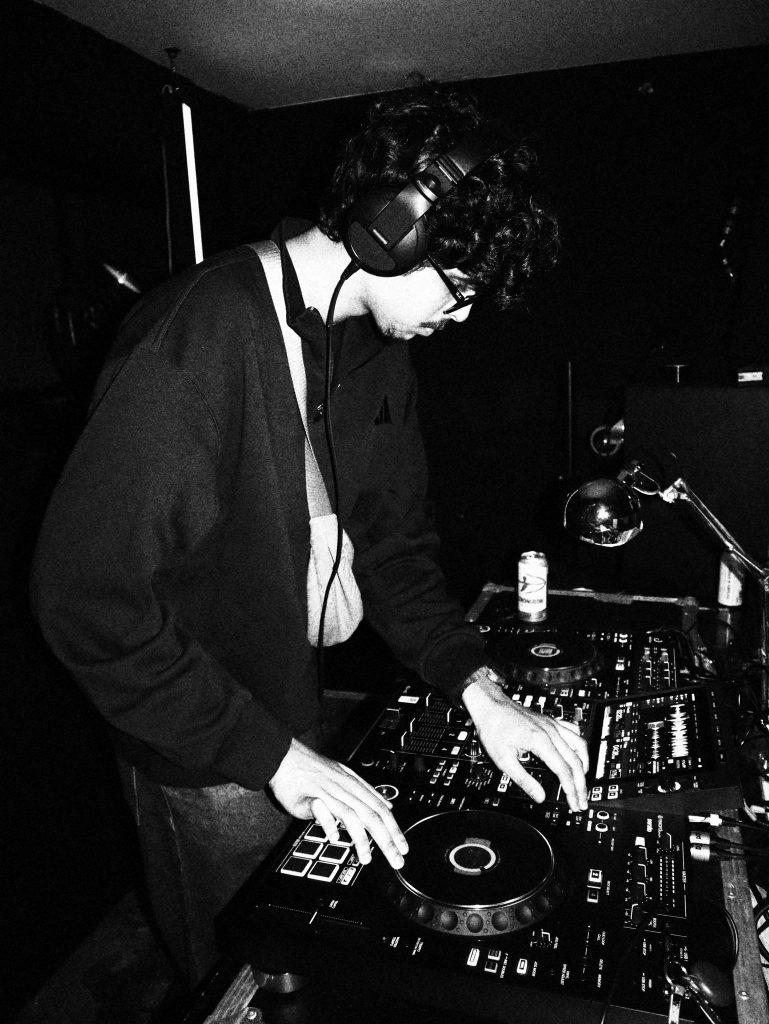
I’m definitely more drawn to DJ sets. There’s something about taking existing sounds, pulling them apart and finding entirely new ways for them to interact that I find incredibly exciting. I generally work with standard club DJ equipment, but if the venue is willing to indulge me, nothing quite beats a Pioneer DJM-V10 mixer paired with a set of CDJs.
The V10 is an absolute beast. The level of control it gives you over individual frequencies, textures and transitions is incredible. You can take even the roughest-sounding tracks and creatively reshape them into something that feels crisp, hard-hitting and almost entirely new. There’s something immensely satisfying about transforming seemingly incompatible sounds into absolute ear candy.
I think that freedom is what appeals to me most about DJing. It’s less about simply playing tracks back-to-back and more about treating the mixer as an instrument in itself. For someone whose sets are built around unexpected left turns and organised chaos, having that level of control opens up an entirely different world of possibilities.
What’s one underrated production skill you wish more electronic artists focused on?
From a DJ’s perspective, I’d definitely say mastering, particularly the ability to achieve a clean, powerful and well-balanced sound without losing the character of the track itself.
I think people sometimes underestimate just how much of a difference good mastering makes on a proper club sound system. For me, it’s especially noticeable in the higher frequencies. There’s something incredibly satisfying about crisp, hard-hitting highs, well-defined percussion and a bassline that carries real weight without overwhelming everything else. When those elements come together properly, a track can take on an entirely different life on the dancefloor.
As someone who enjoys experimenting with different genres, textures and unconventional transitions, I find that well-mastered tracks give me so much more freedom to manipulate sounds without the mix becoming muddy or harsh. It’s not necessarily about making everything louder or cleaner to the point of perfection, but about giving each element enough space to breathe while retaining its impact.
Ultimately, I think a great track should sound just as compelling on a pair of headphones as it does through a massive club sound system. And as a DJ, there’s nothing quite like dropping a beautifully mastered track and hearing every little detail come alive in the room.
Do you see AI as a threat to musicians, a helpful collaborator, or something else? How do you plan to keep your music relevant as the industry changes rapidly because of these tools? By embracing AI, avoiding it, or taking a different approach?
I think AI is one of those things that comes with its fair share of possibilities and problems. I’m all for embracing it as a creative tool, but I think there’s an important distinction to be made between using technology to empower artists and using it to replace them.
For instance, the idea of corporations like Spotify potentially flooding playlists with AI-generated music or artificial artists simply to avoid paying smaller, independent musicians is deeply unethical to me. Music is already an incredibly difficult industry to navigate as an emerging artist, and the last thing we need is technology being used to further concentrate power and revenue in the hands of corporations at the expense of the people who actually sustain musical culture.
On the other hand, if an artist wants to use AI to generate an interesting sample, experiment with sound design, tweak a master or simply explore creative possibilities that might otherwise be inaccessible, I see absolutely nothing wrong with that. In many ways, technological experimentation has always been fundamental to the evolution of electronic music.
I think the real question isn’t whether AI belongs in music, but rather who controls it, who benefits from it and whether it genuinely contributes to creativity or simply commodifies it further. There needs to be a balance between innovation, fair competition and protecting the livelihoods of artists.
As for keeping my own music relevant, I don’t think the answer is necessarily to embrace or reject AI outright. It’s about continuing to develop a distinct creative identity, staying curious and remaining open to new tools without losing the human experiences that make music meaningful in the first place. I genuinely hope we don’t reach a point where music becomes just another endlessly manufactured product, because for me, its real value has always existed in the people, cultures and communities behind it.
If you are a producer, how often do you utilize generative AI tools (e.g., for mastering, sample generation, synth patching, etc.) in your current process?
Not a producer but I do use AI to sometimes negotiate contracts haha.
What is the single biggest challenge facing electronic music artists in the next 5 years?
I think the single biggest challenge facing electronic music over the next five years is saturation, and more importantly, how that saturation is going to fundamentally change the way we perceive and value art.
We’re already living in an era of TikTok artists, algorithm-driven popularity and an almost overwhelming accessibility to music production tools. As technology, particularly AI, continues to simplify the creative process, we’re likely to see an enormous influx of new artists and music. Now, I don’t necessarily think greater accessibility is a bad thing. In fact, democratising creativity is incredibly important. But I do worry about what happens when the sheer volume of content begins to outweigh our ability to meaningfully engage with it.
We’re increasingly moving towards an industry where artists are judged by streams, followers, engagement and their ability to remain visible, rather than the actual quality, originality or cultural significance of their work. Music risks becoming less about artistic expression and more about how effectively someone can navigate an algorithm.
I think we’re already approaching that point of saturation, and when it eventually reaches its breaking point, we may witness a much more fundamental shift in how society understands and consumes art. Perhaps people will begin searching for something more tangible, more human and more deeply connected to the communities from which music emerges.
How would you describe your creative process when a new beat or synth line first clicks?
For me, it’s all about rinsing it through different sets and seeing how far I can push it. Whenever I come across a particularly satisfying beat pattern or a synth that really catches my attention, my immediate instinct is to figure out how I can make it my own. That’s where what I like to call a signature mix comes into play: taking something familiar and finding an unexpected way to introduce a new track that completely changes how you experience both sounds.
A great example is Yousuke Yukimatsu‘s mix of ‘Kuliki’ with The Prodigy. On the surface, it’s a fairly simple combination, but there’s that one moment where everything just clicks, and suddenly the interaction between those sounds becomes something much greater than the sum of its parts. I find that incredibly fascinating.
I think that’s what I constantly chase when I’m mixing. It’s about recognising patterns, experimenting with different rhythmic structures and discovering variations that might not seem obvious at first. Sometimes it’s a particular bassline, an unusual percussion pattern or even the smallest melodic detail that opens up an entirely new direction.
Ultimately, I’m not necessarily trying to reinvent the individual tracks. I’m trying to reinvent the relationship between them. Finding that sweet spot where something feels simultaneously familiar and completely unexpected is what makes the creative process so exciting for me. And when that connection finally clicks, it almost feels like you’ve discovered a new piece of music altogether.
What’s the toughest technical or industry obstacle you’ve faced as an electronic artist?
I think one of the toughest challenges I’ve faced is navigating the gradual decline of the nighttime economy, particularly against the backdrop of a cost-of-living crisis and the growing dominance of what I’d call blue-chip concerts.
People simply cannot afford to participate in art and culture as freely as they once could. Everything is becoming increasingly expensive, and in a world that already moves at an overwhelming pace, even something as simple as a night out has become an activity that requires careful planning, budgeting and consideration.
Then there’s the added challenge of competing with major concerts, festivals and established artists, where audiences might save up for months, sometimes even years, to attend a single event. I completely understand that impulse, but it creates a difficult environment for grassroots promoters and independent electronic artists who are trying to build communities around more intimate, recurring experiences.
For someone involved in both DJing and promoting events, I’ve experienced how difficult it can be to convince people to take a chance on something unfamiliar when their time and money are already stretched so thin. And I think that’s where the real challenge lies. It’s not simply about selling tickets; it’s about making a convincing case for why smaller, independent cultural spaces deserve to exist and be supported.
But despite all of this, I think we have to keep striving and believing in what we’re creating. Underground music has always thrived on resilience, experimentation and community. If anything, these challenges make it even more important to continue building spaces where people can discover something unexpected, connect with one another and experience music outside the increasingly commercialised structures of the wider industry.
If you could revisit one decision from your artistic journey and do it differently, what would it be?
110% backing up my work! I recently lost practically my entire music collection in an unfortunate hard drive failure, which, as you can imagine, was an absolute nightmare. Years of digging, collecting obscure tracks, curating playlists and experimenting with different sounds suddenly disappeared, all because I hadn’t properly backed anything up.
Strangely enough, though, there’s been a bit of a silver lining to the whole experience. Being forced to rebuild my collection from scratch has given me an unexpected opportunity to rediscover myself as an artist, revisit the sounds that genuinely resonate with me and rethink the musical direction I want to take.
In some ways, it’s almost been a creative reset, and I’ve come to appreciate that process of rediscovery. That being said, I most definitely could have done without the pain of losing everything, painstakingly reorganising my music and starting all over again!
So, if there’s one decision I’d revisit, it would be taking the importance of backing up my creative work seriously from day one. I suppose there’s something poetic about finding inspiration in losing your entire music library, but it’s certainly not an experience I’d recommend to anyone.
What’s your current favorite piece of electronic gear or plugin that you can’t stop playing with in the studio?
Interestingly, my current obsession isn’t necessarily a particular piece of gear or plugin, but rather using backing tracks and DJ tools in unconventional ways. I’ve really been enjoying treating entire tracks as effects in themselves, rather than simply playing them as standalone pieces of music.
Sometimes I’ll bring in a track purely for its texture, throw an effect over it, play it in reverse, scratch it or manipulate a particular sound to completely shift the tone of whatever I’m mixing. It’s almost like taking the traditional purpose of a track and turning it on its head.
For example, something as simple as layering a track with a bit of dub echo, then scratching it out while playing around with the Colour FX, can do absolute wonders. Suddenly, a fairly ordinary sound becomes this strange, evolving texture that adds an entirely different dimension to the mix.
I think what fascinates me most is the idea that every track has a life beyond its original composition. A song doesn’t necessarily have to be played as a song; it can become a transition, an atmosphere, a rhythmic tool or even a moment of complete disruption. Lately, I’ve been really enjoying exploring that space between DJing and live sound manipulation, where the tracks themselves almost become instruments.
If you could change one thing about the modern music industry overnight, what would it be?
I think I’d change the almost obsessive need for artists to crack algorithms in order to become successful. There are so many incredibly talented musicians, DJs and producers whose work is being drowned out by people who have simply figured out how to make a catchy reel rather than a genuinely interesting track or mix.
It’s strange that we’re living in an era where an artist can spend years refining their sound, experimenting with different ideas and building something genuinely original, only to find that their visibility depends more on their ability to understand social media algorithms than the quality of their music.
I don’t necessarily have anything against artists who are brilliant at marketing themselves. That’s a skill in its own right. But I do think we’ve reached a point where the ability to generate engagement is becoming almost inseparable from how we measure artistic success, and that really concerns me.
If I could change one thing overnight, it would be to make musical discovery more merit-driven rather than leaving it at the mercy of the algorithm gods. I’d love to see an industry where originality, experimentation and artistic substance are given the space to flourish, regardless of whether someone knows how to turn a 15-second clip into a viral moment.
Ultimately, I think music should be discovered because it moves people, challenges them or makes them feel something unexpected, not simply because an algorithm has decided it’s worth their attention.
What’s one unexpected influence, maybe from outside music, that keeps showing up in your work?
Most definitely the way I approach my legal and academic work. I’ve always found it fascinating how closely the process of constructing a legal argument resembles the way I curate a DJ set. In both cases, I begin by researching and gathering a collection of tools, ideas and materials, before carefully organising them into something coherent, persuasive and emotionally engaging.
In law, it’s about taking seemingly disconnected pieces of evidence, principles and arguments and weaving them into a compelling narrative that resonates with a judge, jury or reader. In music, I find myself doing almost exactly the same thing, except my tools are rhythms, basslines, textures and transitions, and my audience is a dancefloor.
I think what really connects the two is the art of storytelling. It’s not simply about what you present, but how you present it, when you introduce a particular idea, how you build anticipation and ultimately how you make someone feel. A well-placed argument can completely change the direction of a case, much like an unexpected transition can transform the energy of an entire room.
There’s something quite beautiful about that interconnectedness. Two disciplines that might appear worlds apart are, at least in my experience, fundamentally concerned with the same thing: taking complexity, finding patterns within it and constructing a narrative that moves people. I suppose whether I’m addressing a courtroom or a dancefloor, I’m ultimately trying to tell a story that leaves an impression.
Listen to ‘Everything Everywhere’:
Follow HashR:
Soundcloud – Instagram – Linktree
Follow Galaata: